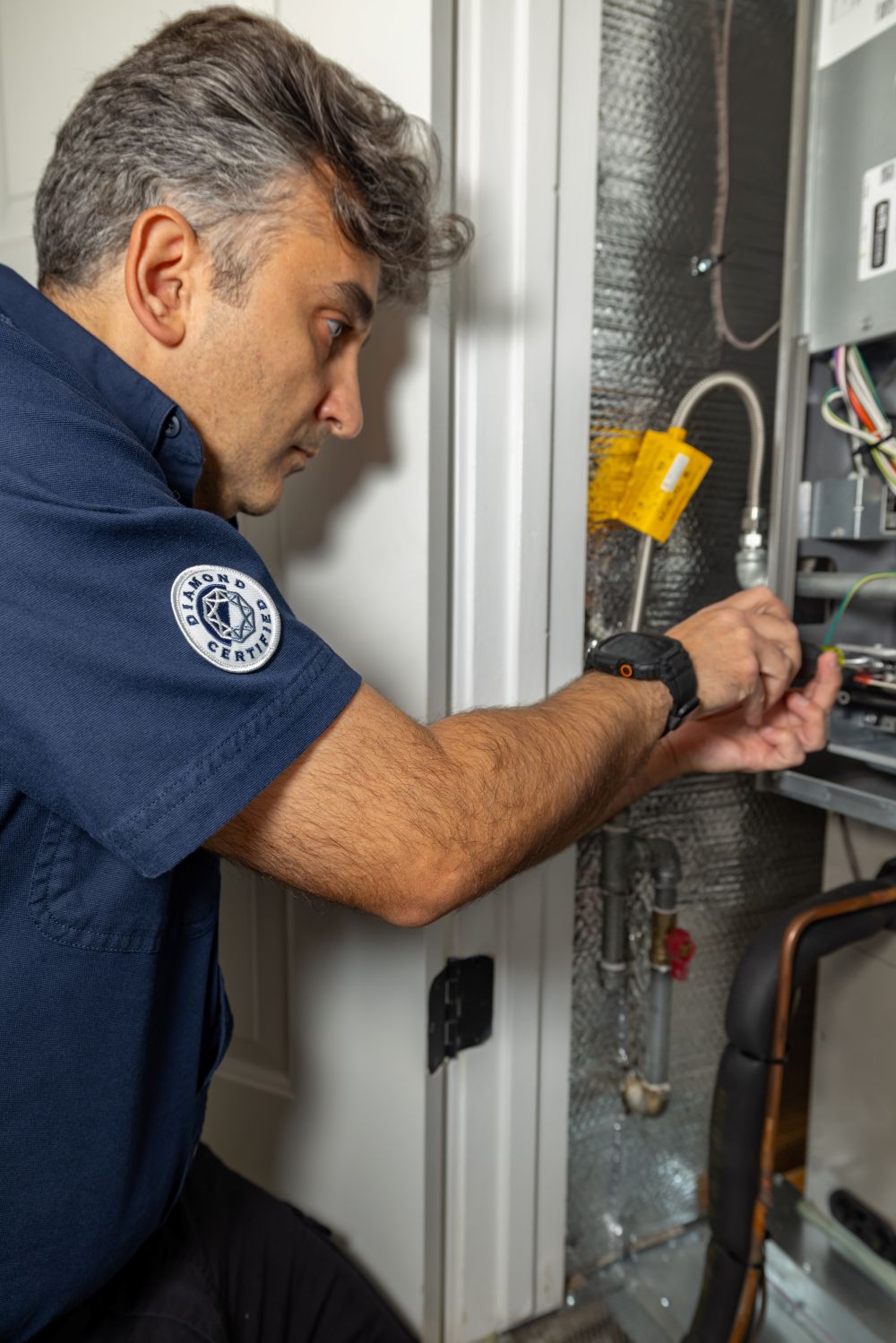
The first cool evening in Pleasanton can be a reminder that your furnace hasn't run in months.
Before heating season begins, it's worth checking a few basics. A dirty filter, blocked vent, incorrect thermostat setting, or developing equipment problem can affect how well your home heats.
You don't need to become an HVAC technician to prepare for fall. A few simple observations, and maintenance when appropriate, can help you understand whether your system is ready.
Here's where to start.
Five Things to Check Before Heating Season
1. Check Your Air Filter
A clogged air filter can restrict airflow and affect heating performance.
If your system has a homeowner-accessible filter, inspect it according to the manufacturer's instructions.
Replace disposable filters when needed, or clean reusable filters according to their instructions.
Use the correct filter size and type. A higher-efficiency filter isn't necessarily compatible with every heating system.
2. Test Your Thermostat
Before the first cold morning, switch your thermostat to heating mode and set the desired temperature above the current room temperature.
Give the system time to respond. Some equipment uses a short startup delay.
If your thermostat has user-replaceable batteries, check them as needed.
If the furnace doesn't start, don't assume the thermostat is defective. The problem may be with the thermostat, equipment power, or another HVAC component.
3. Check Vents and Returns
Walk through your home and look for blocked supply or return vents.
Furniture, rugs, and stored household items can interfere with airflow.
Make sure vents intended to remain open are unobstructed.
If certain rooms are consistently colder than others, note the locations. The cause could involve airflow, ductwork, insulation, or equipment operation.
4. Pay Attention to the First Heating Cycle
When you first use the heat after a long period of inactivity, listen for unfamiliar sounds and notice whether warm air reaches the rooms.
A brief dusty odor can sometimes occur during the first heating cycle. However, a strong, persistent burning smell should not be dismissed as normal.
If you notice smoke, a strong burning odor, or unusually loud mechanical noises, stop operating the equipment if it's safe to do so and arrange an evaluation.
Never ignore a possible gas leak or carbon monoxide warning.
5. Check Your Carbon Monoxide Alarms
If your home has gas-fired heating equipment, carbon monoxide safety is particularly important.
Check that your carbon monoxide alarms are installed in the required locations, working, and within their recommended service life.
Follow the alarm manufacturer's testing and replacement instructions.
Carbon monoxide is odorless, so you cannot rely on your sense of smell to detect it.
If a carbon monoxide alarm sounds, leave the building immediately and call 911 from outside. Do not reenter until emergency responders say it is safe.
Signs Your Furnace May Need Professional Attention
A basic homeowner check won't reveal every equipment problem.
Schedule an HVAC evaluation if you notice any of the following.
The Furnace Isn't Heating Properly
If the system runs but your home stays cold, it may not be producing or distributing enough heat.
Potential causes range from airflow problems to faults within the heating equipment.
A professional diagnosis can identify the issue before repairs are recommended.
The Furnace Keeps Turning On and Off
Repeated short operating cycles may indicate a problem with airflow, controls, equipment sizing, or another component.
Some cycling is normal, but a new pattern of frequent starts and stops deserves investigation.
Don't assume the heat exchanger or thermostat is responsible without testing.
You Hear New or Unusual Noises
A sudden banging, grinding, squealing, or persistent rattling sound may indicate a mechanical or other equipment problem.
The noise alone doesn't identify a failed part.
If the sound is loud or abnormal, stop running the system if safe and arrange service.
Heating Performance Has Changed
A noticeable change in heating performance, unusually long operating cycles, or recurring cold rooms may warrant an evaluation.
Utility bills can also provide clues, but costs vary with energy rates, weather, and household usage.
A higher bill alone doesn't establish that your furnace is malfunctioning.
Important: Know the Difference Between an HVAC Problem and a Gas Emergency
Natural gas is given a distinctive odor often described as sulfur or rotten eggs.
If you notice that odor or otherwise suspect a natural gas leak:
Leave the building immediately.
Do not operate electrical switches, use a phone inside, investigate the furnace, or do anything that could produce a spark.
Once you're safely outside and away from the building, call 911, followed by PG&E at 1-800-743-5000.
Do not return until the appropriate authorities confirm it is safe.
For more information, review PG&E's Gas Safety Guidance.
What Does a Professional Furnace Maintenance Visit Include?
A professional heating maintenance visit reviews the equipment's operation and relevant components.
For a gas furnace, the work may include:
- Checking thermostat and system operation
- Reviewing accessible electrical connections and controls
- Inspecting the air filter and relevant airflow conditions
- Evaluating ignition and burner operation
- Inspecting applicable safety controls
- Reviewing accessible venting and combustion-related components
- Evaluating the heat exchanger as appropriate for the equipment and service scope
The specific procedures depend on the system, its condition, accessibility, and the maintenance service scheduled.
Additional testing, cleaning, parts, or repairs may be outside the routine maintenance scope.
If a technician finds a potential problem, the next step should be an explanation of the findings and the recommended work.
Regular maintenance can help identify developing concerns, but it does not guarantee that equipment will never break down.
When Should You Schedule Furnace Maintenance?
Fall is a practical time to schedule heating maintenance, ideally before your furnace is needed regularly.
ENERGY STAR recommends professional pre-season checkups, with heating systems generally reviewed before winter.
For Tri-Valley homeowners, late summer and early fall can be convenient times to plan ahead.
But if you've missed that window, there's still value in arranging appropriate maintenance later in the season.
And if your furnace has already stopped working, request a diagnostic or repair appointment instead of a routine tune-up.
Don't assume a maintenance visit and a breakdown diagnosis cover the same work.
Heating Service in Pleasanton & the Tri-Valley
Art of Comfort has served Pleasanton and surrounding communities since 2012, beginning as Art's Heating & Cooling.
Our team provides furnace diagnostics, repairs, replacement, and heating maintenance for homeowners in Pleasanton, Dublin, Livermore, Danville, San Ramon, Walnut Creek, and nearby service areas.
Whether you're preparing your furnace for the season or dealing with an existing problem, we can help evaluate the equipment and explain your options.
