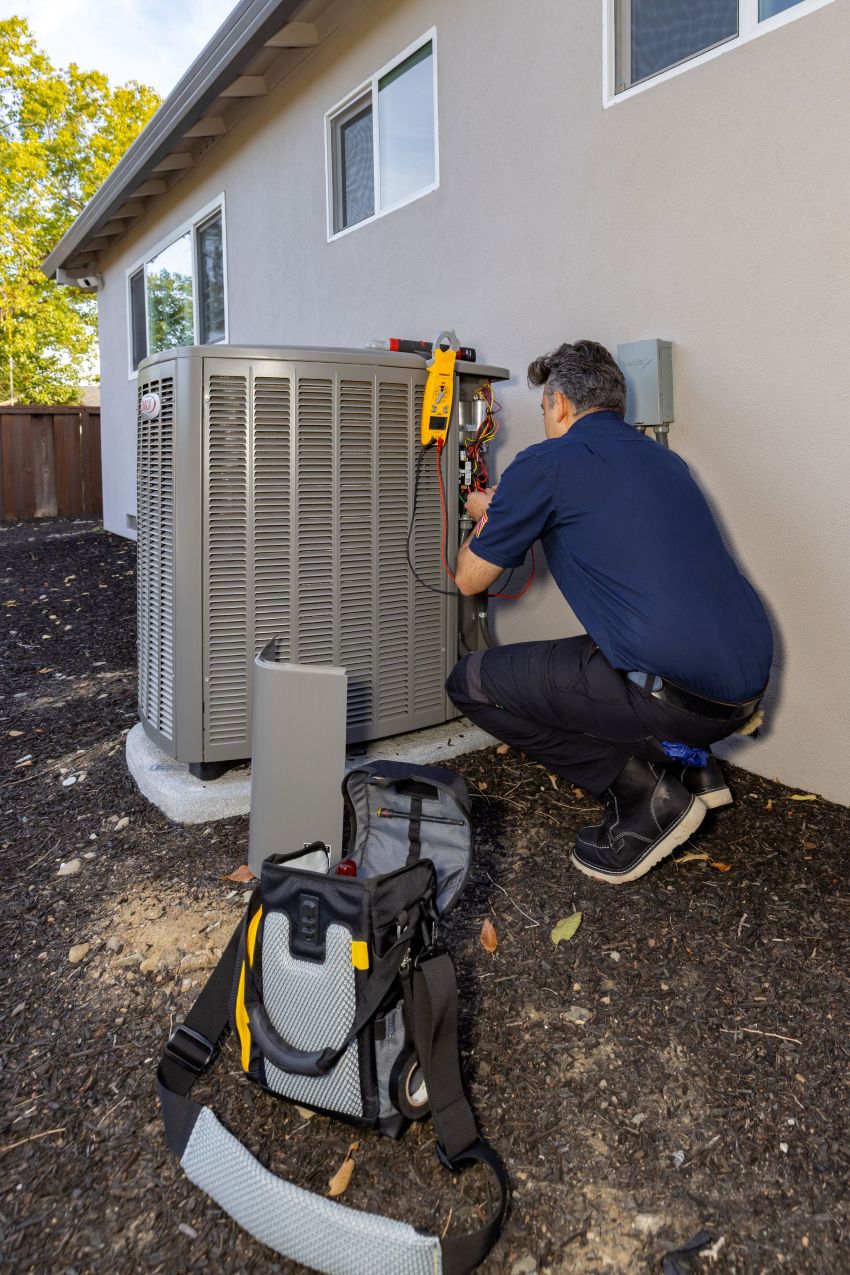
How to Prepare Your Air Conditioner for Summer in Pleasanton & the Tri-Valley
Tri-Valley summers are no joke. Pleasanton, Dublin, Livermore, and San Ramon regularly see temperatures push into the triple digits between June and September — and when that happens, your air conditioner isn't a luxury, it's a necessity.
The worst time to discover your AC has a problem is on the first 100-degree day of the year. A little preparation now can mean the difference between a comfortable summer and an emergency service call during the busiest week of the season. Here's what to check before the heat arrives.
Replace or Clean Your Air Filters
Your air filter is the first line of defense for your AC system — and the most neglected. A clogged filter forces your system to work harder to pull air through, which drives up energy consumption, reduces cooling effectiveness, and puts unnecessary stress on the blower motor and compressor.
What to do:
- Check your filter now and replace it if it's been more than 1–2 months
- Switch to a MERV 8–11 rated filter for better particle capture without restricting airflow
- If you have pets or allergies, check monthly during summer — filters clog faster with heavy use
A clean filter alone can improve your AC's energy efficiency by 5–15%. It takes two minutes and costs a few dollars. There's no easier win in home HVAC maintenance.
Set Your Thermostat for Summer Efficiency
Running your AC at full blast 24/7 isn't just expensive — it's also harder on your equipment. Smart thermostat programming saves energy without sacrificing comfort.
What to do:
- Set to "cool" mode and aim for 78°F when you're home, 85°F when you're away
- Use scheduled programming to start cooling 30 minutes before you arrive home, not hours before
- Enable fan-only mode in the evening when outdoor temps drop — it circulates air without running the compressor
- If you don't have a smart thermostat, consider upgrading — they typically pay for themselves within one cooling season
One important tip for Tri-Valley homes specifically: don't set your thermostat dramatically lower when it's very hot outside. A system trying to hit 68°F when it's 105°F outside will run continuously and may not reach that temperature anyway, wearing out faster in the process.
Inspect and Clean the Outdoor Condenser Unit
Your outdoor unit (the condenser) needs clear airflow to release heat efficiently. Over the winter and spring, debris accumulates — leaves, dirt, cottonwood, and overgrown vegetation can all choke airflow and reduce cooling capacity.
What to do:
- Clear all debris from around the unit — remove leaves, dirt, and any vegetation within 2 feet
- Gently rinse the condenser coils with a garden hose on a low setting (top-down, not side-to-side) to remove dust buildup — avoid high pressure
- Straighten any bent fins with a fin comb if you notice damage
- Ensure there's at least 2 feet of clearance on all sides and 5 feet above the unit
Do not run the system immediately after cleaning — give it 30 minutes to dry fully before turning it back on.
Check Your Ductwork for Leaks and Gaps
Leaky ducts are one of the most common and most overlooked causes of poor AC performance. According to the EPA, the average home loses 20–30% of conditioned air through duct leaks before it ever reaches the living space. In a hot Tri-Valley summer, that's expensive and uncomfortable.
Signs of duct problems:
- Some rooms cool well, others stay warm no matter what
- Your system runs constantly without reaching the set temperature
- Unusually high electricity bills relative to prior summers
- Visible gaps, disconnected sections, or damaged insulation on accessible ducts in your attic or garage
What to do:
- Inspect accessible ductwork for visible gaps, loose connections, or damaged insulation
- Seal small gaps with HVAC-rated mastic tape (not standard duct tape, which fails with heat)
- For significant duct issues, schedule a professional duct inspection — a blower door test can quantify exactly how much air you're losing
Test Your System Before It Gets Hot
Don't wait for a heat wave to find out your AC isn't working. Run a test cycle now, while temperatures are mild, so any issues can be addressed before peak demand season.
How to test:
- Set your thermostat to "cool" at a temperature below the current room temp
- Let it run for 15–20 minutes
- Listen for anything unusual — grinding, banging, hissing, or rattling
- Walk room to room and check for consistent airflow from all vents
- Check that the air coming from vents is noticeably cool, not just slightly below room temperature
If cooling is uneven, airflow is weak from specific vents, or the system short-cycles (turns on and off every few minutes), those are signs worth having a technician look at before summer starts.
Schedule a Professional AC Tune-Up
DIY maintenance covers the basics. A professional tune-up covers everything else — the things you can't check yourself and the early warning signs that prevent expensive mid-summer breakdowns.
A comprehensive AC tune-up from Art of Comfort includes:
- Full system inspection and performance evaluation
- Refrigerant level check and leak test
- Electrical component testing — capacitors, contactors, and wiring
- Evaporator and condenser coil cleaning
- Blower motor and belt inspection
- Thermostat calibration
- Filter inspection and replacement recommendation
We serve Pleasanton, Dublin, San Ramon, Livermore, Danville, Walnut Creek, and surrounding Tri-Valley communities. Scheduling a tune-up in May or early June means you get your pick of appointment times — and we find small problems before they become 100-degree-day emergencies.
Why Summer AC Prep Matters
Skipping seasonal maintenance doesn't just risk a breakdown — it adds up over time:
- Higher energy bills — a poorly maintained system works harder and costs more to run all summer
- Shorter system life — unnecessary stress accelerates wear on compressors and motors
- More expensive repairs — small issues caught in May are cheap fixes; the same issues caught in August during peak season cost more and take longer to schedule
- Lost comfort — an underperforming system may never reach your set temperature during the hottest days
The Tri-Valley averages 30+ days per year above 90°F. Your AC is going to be working hard. Give it the best chance to perform.
