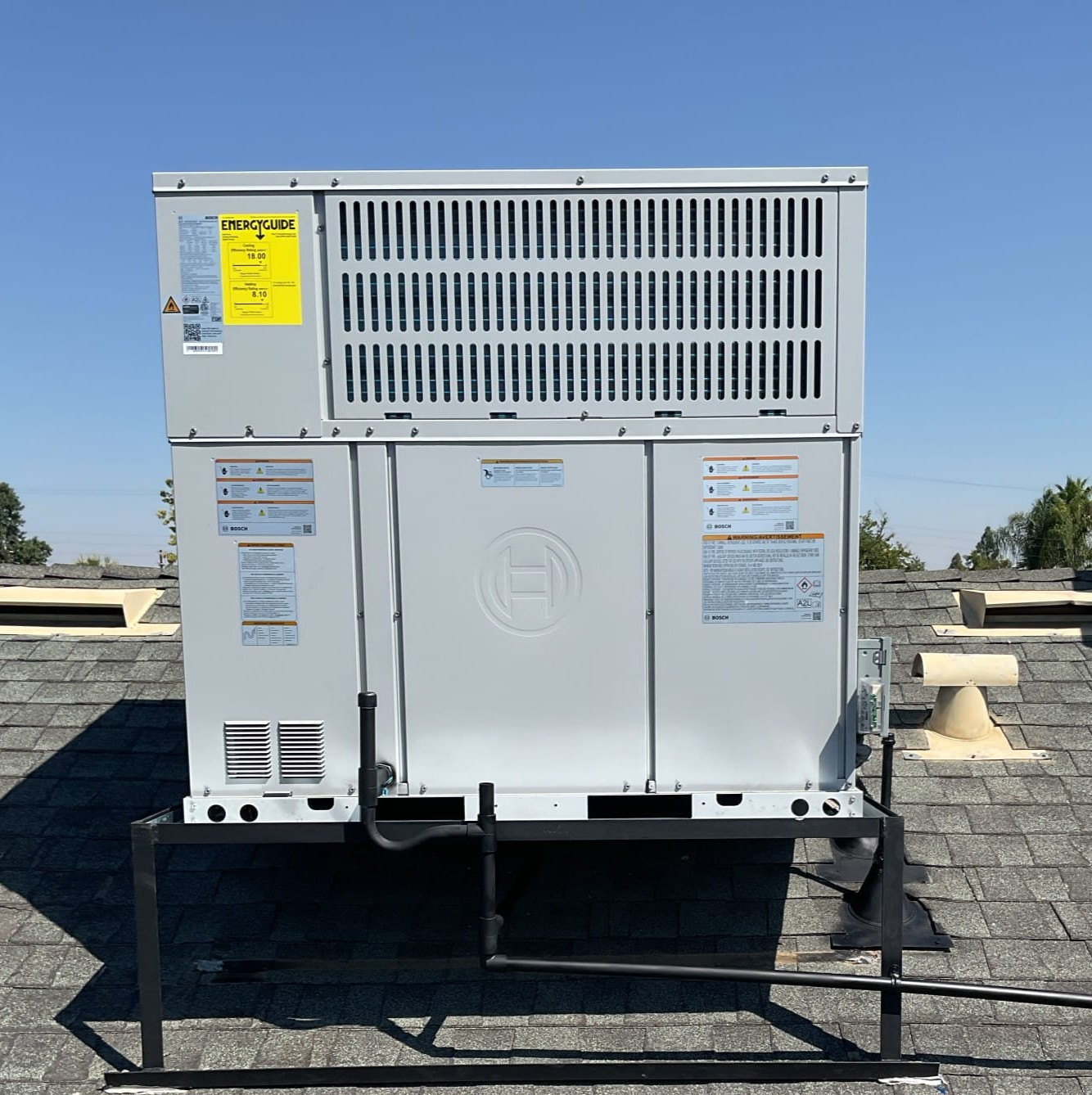
Your air conditioner has stopped cooling, or your furnace needs another repair. Now you're facing a decision: fix what you have or invest in new equipment?
There's no single dollar amount or equipment age that can answer that question for every home.
A relatively inexpensive repair may make sense even on an older system. A more expensive repair might also be worthwhile if the equipment is otherwise in good condition and still under warranty.
The better approach is to understand what's wrong, what the repair will accomplish, and how the cost compares with your alternatives.
Here's what Pleasanton and Tri-Valley homeowners should consider.
What About the $5K Rule?
You may have heard of the HVAC “$5K rule.”
It suggests multiplying your system's age by the cost of the proposed repair. If the result exceeds $5,000, the rule recommends replacement.
It's an easy formula to remember. But it's not a reliable decision on its own.
Consider a 15-year-old air conditioner that needs a relatively straightforward repair. The formula could recommend replacing the entire system even if the repair is practical and the rest of the equipment is performing well.
The opposite can happen, too. A newer system with a serious recurring problem may deserve a closer look even when the formula suggests repairing it.
The $5K rule doesn't account for the equipment's actual condition, warranty coverage, previous repairs, or the cost of a suitable replacement.
Use it, at most, as a prompt to investigate, not as a reason to approve a new system.
Five Things That Matter More Than a Formula
1. The Age and Condition of Your Equipment
Equipment age matters, but it's only part of the picture.
As a general guide, ENERGY STAR suggests evaluating air conditioners and heat pumps more than 10 years old and furnaces more than 15 years old when performance problems arise.
Those aren't automatic replacement deadlines.
A well-maintained system can remain useful beyond those ages. A younger system can also develop significant problems.
What matters is how your particular equipment is operating and whether its condition supports continued repair.
2. What Actually Needs Repair
Not every repair carries the same implications.
Replacing a failed control component is different from addressing a major refrigerant-system problem or a serious furnace safety concern.
Before approving the work, ask:
- What failed, and how was the problem diagnosed?
- Is the issue isolated, or does it suggest other equipment problems?
- What is included in the repair price?
- Are replacement parts available?
- What warranty coverage applies?
- Is the equipment safe to continue operating?
A clear diagnosis should come before a recommendation to replace the entire system.
3. How Often the System Has Broken Down
One breakdown doesn't necessarily mean your equipment is at the end of its useful life.
Recurring failures are more concerning, especially when they involve different components or require repeated service visits.
Look back at your repair history.
If you've paid for several significant repairs and the system continues to have problems, replacement may deserve serious consideration.
If this is the first issue in years, a repair may be a reasonable decision.
4. How Well Your Home Heats and Cools
Sometimes the equipment still operates, but your home isn't comfortable.
You may notice rooms that never reach the desired temperature, unusually long operating cycles, or poor airflow.
These problems don't always require a new furnace or air conditioner.
Duct leakage, airflow restrictions, thermostat issues, equipment settings, and insulation can all contribute to comfort problems.
Before investing in new equipment, make sure the source of the problem has been identified.
5. The Actual Cost of Repair Versus Replacement
When a repair is expensive, ask for a written comparison.
A useful comparison should include the proposed repair, the condition of the remaining equipment, and the scope and cost of a suitable replacement.
A replacement estimate should also explain whether ductwork, electrical work, permits, or other installation changes are necessary.
Don't compare a repair quote with a vague advertised system price. Compare it with a complete proposal for your home.
When Repairing Your HVAC System Makes Sense
Repair may be the better option when the problem is isolated, the equipment is otherwise operating well, and the proposed work is reasonably priced.
A system with a good maintenance and repair history may have useful life remaining.
Warranty coverage can also change the calculation. If a failed part is covered, your actual out-of-pocket cost may be substantially different from the full repair price.
At Art of Comfort, we believe homeowners should understand practical repair options before making a replacement decision.
When Replacement Deserves Serious Consideration
Replacement becomes more compelling when several concerns occur together.
For example, an aging air conditioner with repeated failures, expensive repairs, and ongoing comfort problems may be a poor candidate for another major investment.
The same is true of a furnace with significant safety concerns that cannot be safely and appropriately resolved through repair.
New equipment also provides an opportunity to evaluate system capacity, airflow, comfort features, and efficiency.
But newer doesn't automatically mean lower monthly bills. Actual operating costs depend on your home, energy rates, equipment selection, and usage.
Should You Replace Your Furnace and AC Together?
Not necessarily.
A furnace and central air conditioner may share ductwork and certain indoor components, but they don't always need to be replaced at the same time.
The answer depends on the condition and compatibility of the equipment.
For some homes, replacing one component is appropriate. In others, installing a matched system may make more sense.
Ask your contractor to explain what can be retained, what needs replacing, and how the decision affects performance and warranty coverage.
If you're considering a different system configuration, a heat pump may also be worth evaluating.
What Should Pleasanton Homeowners Ask Before Deciding?
Before approving a major HVAC repair or replacement, make sure you understand the recommendation.
You should be able to answer these questions:
- What caused the problem?
- Is the equipment safe to operate?
- What would the proposed repair accomplish?
- What is the total repair cost, including applicable labor and parts?
- What warranty coverage applies?
- What condition is the rest of the equipment in?
- What would a suitable replacement cost, including installation?
- Are there ductwork or airflow problems that need attention regardless of the equipment decision?
If you're being asked to replace an entire system without a clear explanation, it's reasonable to seek another opinion.
Our Approach at Art of Comfort
Art of Comfort began in 2012 as Art's Heating & Cooling and continues serving Pleasanton, Dublin, Livermore, Danville, San Ramon, and surrounding East Bay communities.
Our goal is to help homeowners understand their equipment and the work being recommended.
Sometimes that means a repair. Other times, replacement is worth considering.
We explain the findings, discuss appropriate options, and provide estimates so you can make an informed decision.
If you're considering new equipment, free in-home estimates are available for qualifying HVAC replacement projects.
Need help with your existing system?
Call (925) 291-0871 or request service online.
