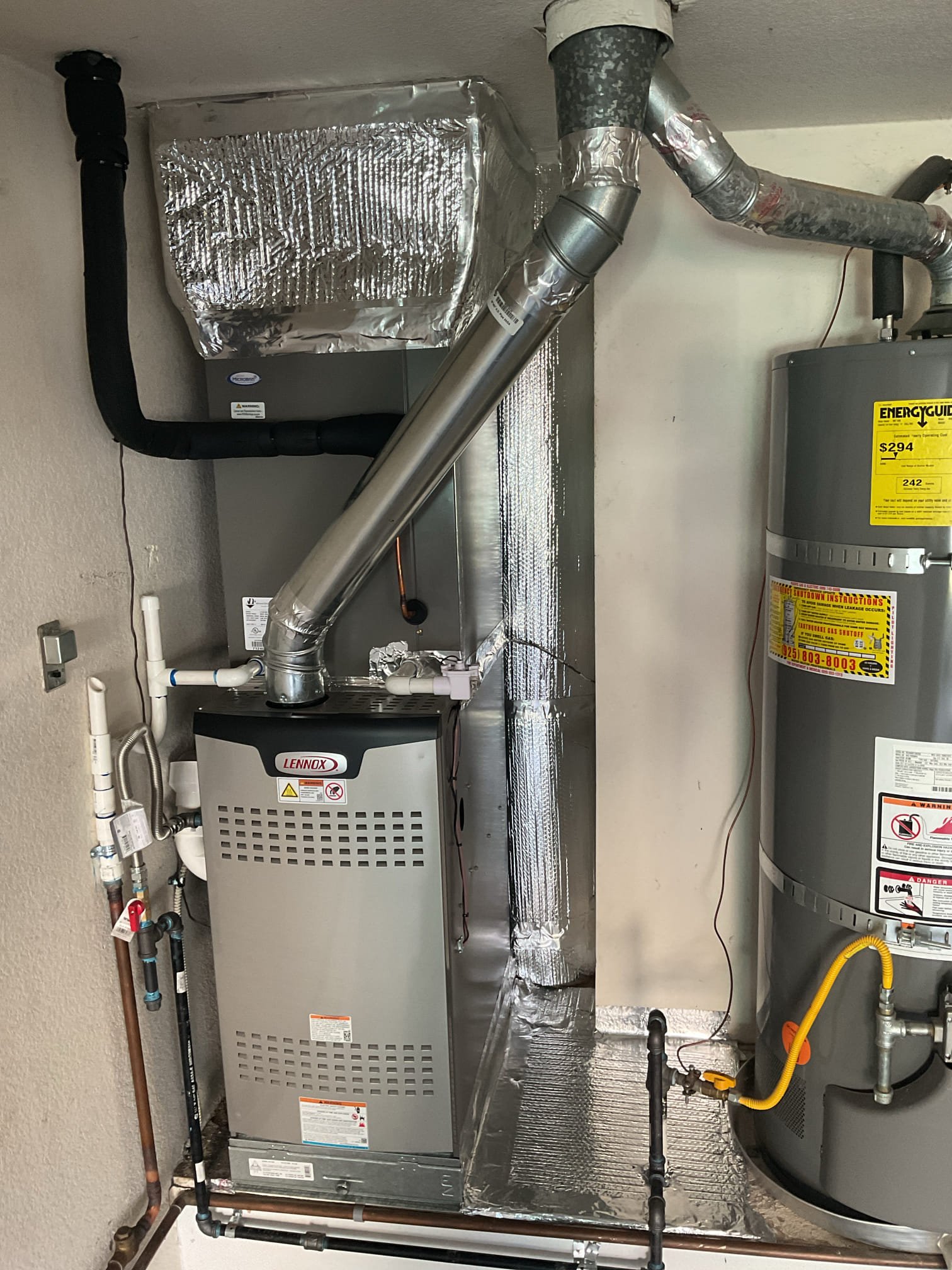
The worst time to discover your furnace has a problem is the first cold night of the season. By then, every HVAC contractor in the Tri-Valley is slammed, and emergency installs rarely produce the best outcome. Evaluating your furnace before heating season begins gives you time to get a diagnostic, weigh your options, and schedule work on your terms, not on the calendar's.
Art of Comfort is Diamond Certified and a Premier Lennox Dealer, serving Pleasanton, Livermore, Danville, and the broader Tri-Valley area.
Top Signs a Furnace Is Nearing the End of Its Life
Furnaces do not typically fail without warning. They show signs over time, and recognizing those signs early is the difference between a planned replacement and an emergency call on the coldest night of December.
Age of 15 to 20 years or more. Most gas furnaces have a reliable service life of 15 to 20 years with proper maintenance. A furnace in this age range may still run, but it is operating on borrowed time. If yours is approaching or past this threshold, it deserves a closer look regardless of how it seems to be running.
Rising energy bills with no obvious cause. As furnaces age, their efficiency declines. Combustion components wear, heat exchangers develop small cracks, and the system has to work harder to produce the same amount of heat. If your gas bills in winter have been trending up while your usage patterns have stayed the same, the furnace may be the reason.
Frequent or recurring repairs. One repair in three years is normal. Repairs every season, or multiple repairs within a single year, are a signal that the system is in general decline rather than dealing with an isolated problem. At some point, continued repair spending on a failing system stops making financial sense.
Uneven heat distribution. If some rooms in your home are consistently too cold while others are comfortable, the furnace may be losing the ability to distribute heat effectively. This can also be a ductwork issue, but in an older system it often points to declining equipment performance.
A yellow pilot light instead of blue. A healthy gas furnace burns with a steady blue flame. A yellow or flickering flame indicates incomplete combustion, which can produce carbon monoxide. This is a safety concern that requires immediate attention from a qualified technician.
Unusual sounds. Banging, popping, rattling, or squealing sounds from your furnace are not normal operating noise. These sounds often indicate a failing blower motor, a cracked heat exchanger, or loose components. Any new or unusual noise from a furnace warrants a professional inspection.
The Difference Between a Furnace That Needs Repair vs. Replacement
Not every symptom above means your furnace needs to be replaced. The fix-first approach means starting with a proper diagnostic to understand what is actually happening before any decision is made.
A furnace that is 12 years old with a failed igniter is almost certainly worth repairing. The repair is typically straightforward, the system has reasonable life remaining, and a new system would not make financial sense. A furnace that is 19 years old, has a cracked heat exchanger, and has needed repairs for the past three years is a different conversation.
The diagnostic visit answers the right questions: What specifically is failing? What would the repair cost? What is the realistic remaining life of the system? With that information in hand, the repair-vs-replace decision becomes a matter of math, not guesswork.
Art of Comfort technicians do not receive commissions on equipment sales. The recommendation you receive is based on what makes sense for your home and your situation.
What a Furnace Replacement Involves and How to Choose the Right System
If replacement is the right call, the next step is choosing a system that fits your home. Several factors influence this decision.
Home size and layout determine the output capacity needed. An undersized furnace will struggle to heat your home on cold nights. An oversized one will short-cycle, reducing efficiency and comfort. Proper sizing requires a load calculation, not a guess based on the old system's size.
Efficiency ratings. Modern gas furnaces range from 80% to 98% AFUE (Annual Fuel Utilization Efficiency). Higher-efficiency models cost more upfront but use significantly less gas over time. In a climate like Pleasanton's, where heating is needed for a meaningful portion of the year, the efficiency difference adds up. Available rebates from your utility provider may help offset the cost of a higher-efficiency model.
Lennox options. As a Premier Lennox Dealer, Art of Comfort installs Lennox furnaces across the full efficiency range. Lennox equipment is known for reliability and quiet operation, and as an authorized dealer, Art of Comfort can offer the full manufacturer warranty coverage.
Heat pumps as an alternative. For some Tri-Valley homes, a heat pump may be worth considering instead of a direct furnace replacement. Heat pumps provide both heating and cooling from a single system and are highly efficient in mild climates. The Tri-Valley's winters are cold enough to warrant a closer look at system sizing before assuming a heat pump will handle the coldest nights.
Learn more about furnace installation in Pleasanton and compare heat pump vs. gas furnace options for your home.
Why Acting Before Peak Season Makes Sense
HVAC contractors across Pleasanton, Dublin, Livermore, and the rest of the Tri-Valley are at full capacity once heating season arrives. A diagnostic appointment may still be available, but installation slots for a new system can fill up weeks out.
As the first cold nights arrive, homeowners who waited are competing for limited slots. Emergency installations and rushed decisions rarely produce the best outcomes.
Acting before the season also means you have time to compare equipment options without pressure, explore available utility rebates, and schedule the work at a time that is convenient for your household rather than urgent. An inspection before heating season does not commit you to anything. It gives you information. And information, in this case, is worth quite a bit.
