What Is a Heat Exchanger? How It Works, Common Problems, and When to Call a Pro
Your furnace runs all winter to keep your Pleasanton home warm, but most homeowners have no idea what the heat exchanger inside it actually does, or why a cracked one is treated as an emergency. This guide explains exactly what a heat exchanger is, how it works, the signs that something's wrong, and when to call a licensed HVAC technician.
What Is a Heat Exchanger?
A heat exchanger is a metal component inside your furnace that transfers heat from the combustion process to the air circulating through your home — without the two ever mixing.
Here's the simple version: your furnace burns gas to generate heat. That combustion produces hot gases — including carbon monoxide. The heat exchanger is a series of metal chambers or coils that absorbs the heat from those combustion gases and transfers it to the air your blower pushes through your ducts. The combustion gases stay sealed inside the heat exchanger and exit safely through the flue. The clean, heated air goes to your rooms.
When the heat exchanger is working correctly, you get warm air. When it develops a crack, combustion gases — including carbon monoxide — can leak into your living space. That's why heat exchanger condition is taken seriously.
How Does a Heat Exchanger Work?
The process happens in a continuous cycle every time your furnace runs:
- The burners ignite and produce hot combustion gases inside the heat exchanger
- The heat exchanger metal walls absorb the heat from those gases and reach temperatures of 300–500°F
- Your blower motor pushes household air across the outside of the heat exchanger
- That air absorbs the heat through the metal walls and gets distributed through your ducts
- The combustion gases — now cooled — exhaust safely through the flue to the outside
The key design principle is that the combustion gases and your household air never make contact. The metal walls of the heat exchanger are the barrier between them.
Types of Heat Exchangers in Residential HVAC Systems
Primary heat exchanger — found in all gas furnaces. This is the main component described above, typically made of aluminized steel or stainless steel. Its condition is checked during every furnace inspection.
Secondary heat exchanger — found in high-efficiency condensing furnaces (90%+ AFUE). These extract additional heat from the exhaust gases before they leave the system, which is why high-efficiency furnaces produce condensate (water). The secondary exchanger is more susceptible to corrosion due to the acidic nature of the condensate.
Evaporator coil — sometimes called the cooling heat exchanger. This is the indoor coil in your AC or heat pump system that absorbs heat from your home's air during cooling season. While technically a heat exchanger, it operates on refrigerant rather than combustion, so "heat exchanger" in most HVAC conversations refers to the furnace component.
Signs of a Cracked or Failing Heat Exchanger
A cracked heat exchanger is one of the most serious HVAC problems a homeowner can face — not because of the repair cost, though that's significant, but because of the carbon monoxide risk. Here's what to watch for:
Carbon monoxide detector alarm This is the clearest signal. If your CO detector goes off, treat it as an emergency — leave the home, call 911, and don't re-enter until the source has been identified. A cracked heat exchanger is one of the most common causes of CO buildup in homes with gas furnaces.
Soot or black marks around the furnace Incomplete combustion or combustion gas leakage can leave soot deposits near the furnace or on the heat exchanger itself. This is visible during a professional inspection.
Unusual smells when the furnace runs A formaldehyde-like or chemical smell when your furnace starts is a warning sign. Most combustion gases are odorless, but some byproducts have a detectable smell, particularly if the crack allows gases to mix with household air.
Visible cracks, rust, or corrosion During a professional tune-up, technicians inspect the heat exchanger for cracks, corrosion, and stress fractures. Rust and corrosion weaken the metal over time, making cracks more likely — especially in older systems or those that have experienced repeated overheating.
Symptoms when the furnace runs Headaches, dizziness, nausea, or flu-like symptoms that improve when you leave the house and return when you come back are a serious warning sign of CO exposure. Don't wait for a detector to confirm this — call a technician immediately.
Furnace flame that rolls out or flickers A healthy furnace flame burns steady and blue. A flame that flickers, rolls out of the burner area, or burns yellow/orange can indicate combustion gas disruption caused by a cracked exchanger affecting airflow.
What Causes Heat Exchanger Cracks?
Understanding the causes helps explain why regular maintenance matters:
Age and metal fatigue — Heat exchangers expand when hot and contract when cool, thousands of times over their lifespan. Most are designed to last 15–20 years, but this thermal cycling eventually causes stress fractures, particularly at seams and bends.
Overheating from restricted airflow — A clogged air filter is one of the leading causes of premature heat exchanger failure. When airflow is restricted, the heat exchanger gets hotter than it's designed for. Repeated overheating accelerates metal fatigue and warping.
Oversized furnace — A furnace that's too large for the home short-cycles (turns on and off frequently) and never reaches steady-state operation. This amplifies the thermal stress on the heat exchanger compared to a properly sized system running longer, steadier cycles.
Corrosion — Condensate from high-efficiency furnaces, household chemicals stored near the HVAC system, and high humidity can all accelerate corrosion of heat exchanger metal over time.
Heat Exchanger Issues in Tri-Valley Homes
Pleasanton, Livermore, Dublin, and San Ramon have a climate that's easier on heat exchangers than more extreme regions — mild winters mean furnaces run less than they do in colder parts of the country. But a few local factors are worth knowing:
Dust and air quality — The Tri-Valley's dry summers and seasonal wind events mean more particulate in the air, which clogs filters faster than homeowners expect. A neglected filter is the #1 preventable cause of heat exchanger overheating. Checking filters monthly during heating season matters here.
Older housing stock — Many Pleasanton and Dublin homes were built in the 1970s–1990s with original or first-replacement furnaces that are now approaching or past their expected lifespan. If your furnace is 15+ years old, heat exchanger inspection should be part of every annual tune-up.
Temperature swings — While winters are mild, the daily temperature fluctuation in the Tri-Valley is significant. Furnaces that cycle on and off multiple times per day across large temperature swings experience more thermal stress than systems in climates with more stable temperatures.
Can a Cracked Heat Exchanger Be Repaired?
In most cases, no — and any company that offers to "weld" or patch a cracked heat exchanger should be viewed with serious skepticism. The American Gas Association and most furnace manufacturers do not consider crack repair a safe or permanent fix, because the thermal cycling that caused the crack will cause a repaired section to fail again.
The options for a cracked heat exchanger are typically:
- Replace the heat exchanger — possible on newer systems (under 10 years old) where the rest of the furnace is in good condition. Heat exchanger replacement is expensive ($500–$1,500+ parts and labor) and only worthwhile if the system has significant remaining useful life.
- Replace the furnace — the more common recommendation for systems over 10–12 years old. If the heat exchanger has cracked, the system has reached the end of its useful life and replacement is more cost-effective than repair.
If you receive a diagnosis of a cracked heat exchanger, a second opinion is always worthwhile — this is one of the situations where Art of Comfort's free second opinion offer is most valuable. We'll inspect the exchanger, confirm the diagnosis, and give you an honest assessment of repair vs. replace.
What to Expect During a Heat Exchanger Inspection
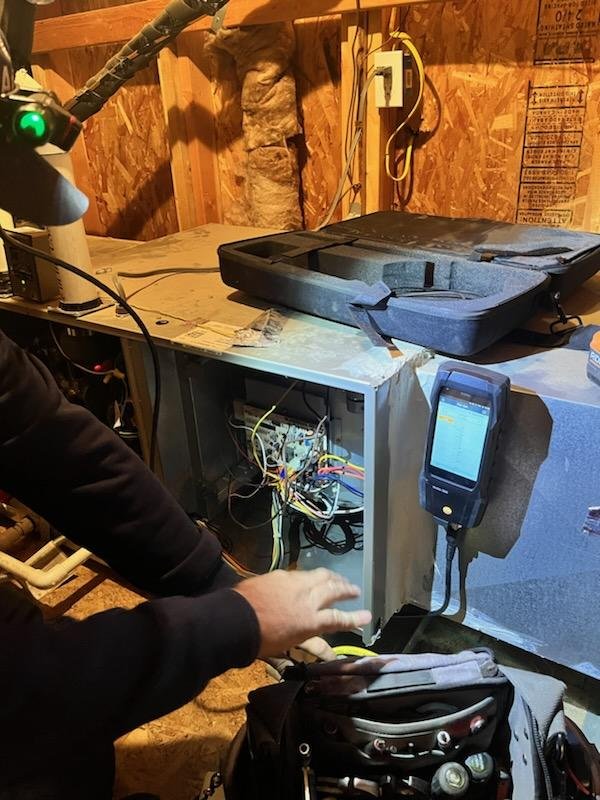
A proper heat exchanger inspection is part of every furnace tune-up. Here's what a thorough inspection involves:
- Visual inspection — examining accessible surfaces for cracks, corrosion, rust, and soot deposits
- Combustion analysis — measuring flue gas composition to detect anomalies that indicate leakage
- Flame observation — watching burner flame behavior for rollout or disturbance that suggests compromised airflow
- CO testing — measuring carbon monoxide levels in the air stream to detect any leakage into household air
- Camera inspection — for older systems or where visual access is limited, a camera can inspect interior surfaces not visible to the naked eye
A technician who completes a furnace tune-up in 20 minutes has not performed a thorough heat exchanger inspection. A real inspection takes time.
