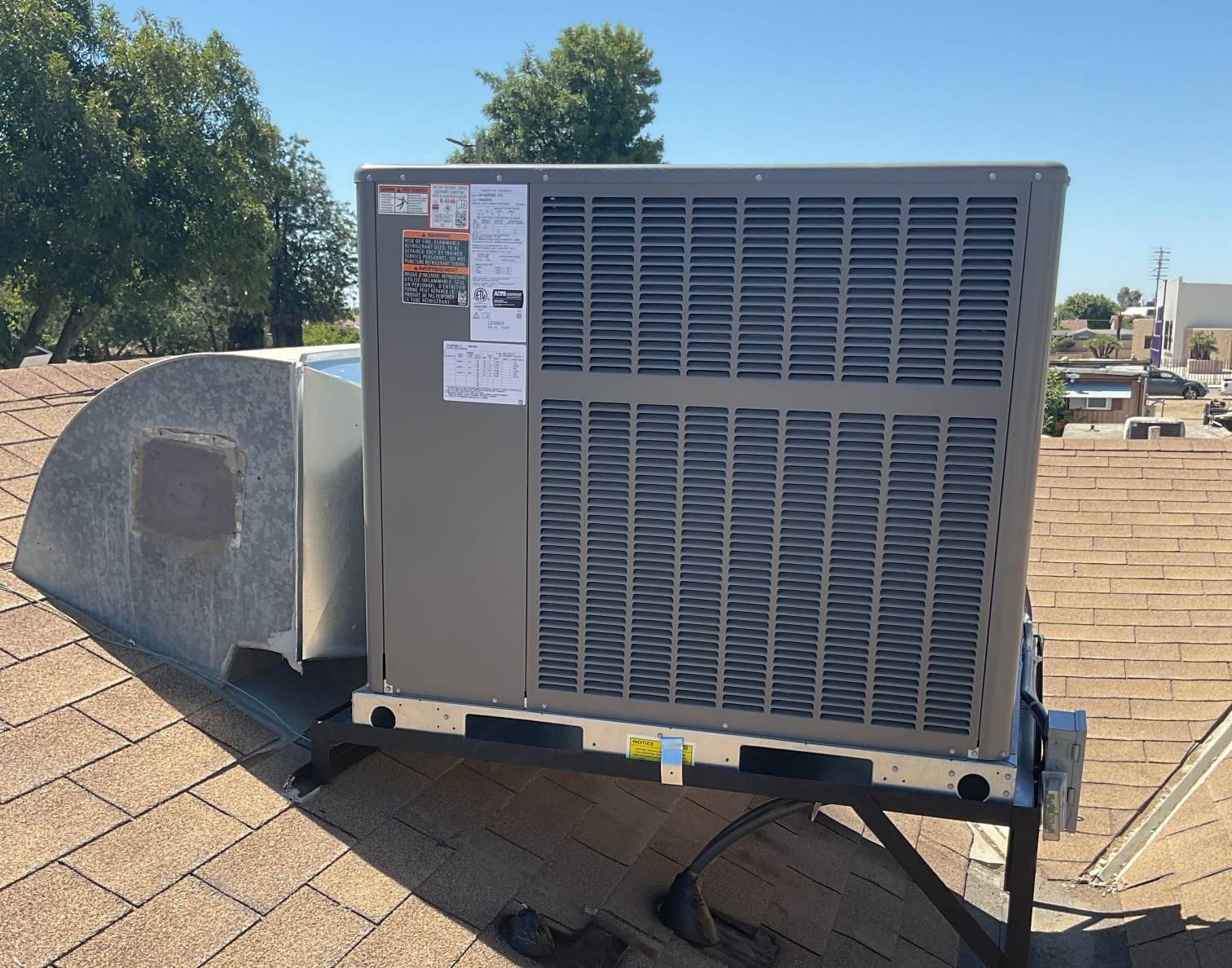
When you’re shopping for a new HVAC system in Pleasanton or anywhere across the Tri-Valley, one of the first decisions you’ll face is whether to go with a packaged unit or a split system.
A split system separates the indoor and outdoor components and typically offers better efficiency and quieter operation, since the compressor stays outside away from living spaces. A packaged unit combines everything, condenser, compressor, coil, and air handler, into one outdoor cabinet, which makes it a common choice for homes with limited indoor space. The right fit depends on your home’s layout, available space, and local climate.
What Is a Split HVAC System?
A split system is the most common type of HVAC setup in residential homes. It splits the different components across two units, one inside your home and one outside:
- Outdoor unit: Contains the condenser and compressor
- Indoor unit: Contains the air handler and evaporator coil
These two parts work together via refrigerant lines and ductwork to cool or heat your home efficiently.
Best For:
- Homes with available attic or closet space
- Areas with wider temperature ranges like Pleasanton
- Long-term energy savings and efficiency
Pros:
- Higher efficiency ratings (especially with variable-speed systems)
- Easier access to individual components for repairs
- Flexible configurations for zoning or smart thermostats
Cons:
- Installation can be more invasive
- Typically higher upfront costs
To learn more about how we install and service both system types, visit our Air Conditioning Services page.
What Is a Packaged HVAC Unit?
A packaged HVAC unit contains all its components—condenser, compressor, coil, and air handler—in one single cabinet, usually installed outdoors, often on the roof or a concrete pad.
Best For:
- Homes or buildings with limited indoor space
- Commercial applications or mobile homes
- Easy rooftop or ground-level installation
Pros:
- Space-saving design
- Faster and often less expensive installation
- Easier to maintain in some commercial settings
Cons:
- Often lower energy efficiency than split systems
- Exposed outdoor components can wear down faster
- Can be noisier due to outdoor fan/motor placement
According to Energy.gov, properly installed high-efficiency HVAC systems can reduce energy use by up to 50% in homes.
Which Is Right for You? Pleasanton vs. Livermore Considerations
In Pleasanton, where energy efficiency and zoning are often top priorities, homeowners may prefer split systems for their flexibility and long-term savings.
In Livermore, where summer temperatures regularly climb higher than the coastal-influenced parts of the Tri-Valley, packaged systems are sometimes favored for their compact design and ease of rooftop or ground-level installation, especially in smaller homes or properties with limited indoor utility space.
Still not sure what’s best for your home? Our team can help you evaluate your current layout, energy goals, and long-term comfort needs.
